Follow GuyMacPherson on Twitter
Showing posts with label steven wright. Show all posts

Wednesday, January 16, 2013

Steven Wright interview (2013)


Okay, so I mentioned I spoke to Steven Wright on Monday. You've also read, I hope, the interview I did with him in 2002 for comparison's sake. Now here's the current one. I'm not sure they come across on the page (er, or screen) like they do over the airwaves, but they were studies in contrast. In 2002, Wright was more guarded, more in his head. In 2013, he was positively engaging. In 2002, if I remember correctly, it was a struggle to get through 20 minutes. On Monday, we spoke for half an hour and still had more to go so I called him back. The interview was a lot of fun. Hope you enjoy it half as much as I did.

Steven Wright plays the River Rock Show Theatre on Saturday, January 19.

Steven Wright
January 14, 2013


"I thought it would take longer to get this old." – Steven Wright


Steven Wright: Hello?

Guy MacPherson: Hello, Steven?
SW: Hi, how’s it going?

GM: Great, thanks. Thanks for talking to me. It’s Guy MacPherson in Vancouver.
SW: Are you on a speaker phone?

GM: Yeah, but I’m close to it. It’s the only way I can record it.
SW: No, I can hear it. I’m just curious.

GM: Are you at home now in New England?
SW: No, I’m in Los Angeles.

GM: I spoke to you back in 2002.
SW: Oh, really?

GM: Yeah. It seems not that long ago until I do the math.
SW: Yeah, where did I live then?

GM: You lived somewhere in Massachusetts, I think.
SW: Yeah, okay. I must have just moved there because I’ve lived there about ten years. I grew up in Massachusetts, went to college in Massachusetts, and I lived in LA, then New York City, then back to LA for, like, ten years, and then I wanted to go back home to Massachusetts, which I did ten years ago. So you talked to me right when I got there, I guess.

GM: It’s weird. I’m just a little younger than you.
SW: You sound like you’re 27.

GM: I have a very immature voice.
SW: I’m not saying that. Do people think you’re younger when they hear you on the phone?

GM: Well, it’s never come up.
SW: I know, I know. You know, when you hear someone on the radio over the years and then you see their face, sometimes it doesn’t match up.

GM: I’m finding it’s sort of a surreal process getting older. And when I look at 2002, to me it’s like we just talked a couple years ago.
SW: Absolutely. I agree. To me, it just turned into the 2000s. To me, the century just changed recently, like about three days ago. Is that what you’re saying?

GM: Yeah! And when some young comic talks about the ‘90s as if it was ancient history, I’m like, ‘What are you talking about? That was three weeks ago.”
SW: (laughs) We’re getting old, my friend. We’re crossing that line. We knew it would happen. I have this line – I haven’t said it on stage but I have it written down in my notebook: I thought it would take longer to get this old.

GM: (laughs) Yeah!
SW: Isn’t that what you’re saying?

GM: That is exactly it.
SW: (laughs)

GM: You crystalized my thought process. I saw in an interview you did five years ago that you said you’re still the same 11-year-old kid. I’m finding, as my friends and I age, that’s true. I think that would surprise a lot of people in their 20s or maybe even 30s, is that we’re just old on the outside. On the inside, we’re still the same 11-year-old kid.
SW: Yes. Absolutely. I mean, I was over watching the football game with my friend yesterday and we were like we were in seventh grade, joking the entire game. And the thing about people in their 20s, see, we’ve been young and now we’re oldish… or old… or getting old. They’ve only been young, these people in their 20s. So they only have that angle on it. They don’t know that when you get up to us, we just look different on the outside. Absolutely. They think we’re different. That’s what you’re saying, and I agree. They think that we are different, like we’re in another planet of life because we look so much older than them. But what they don’t know is we’re just like them except the outside looks different, like you said. And perspective has changed, too, with time. But the silliness, the joking is still the same, looking at girls is still the same.

GM: Definitely. I remember reading an interview years ago with a famous director. I can’t remember who it was but he was old and he was at a dinner party flirting with some young woman across the table and then stopped when he realized what she was seeing.
SW: Yeah, yeah, yeah! I’ve had that, too. A friend of mine pointed out something interesting to me about that type of thing. The same guy I saw the football game with yesterday. You see, when you see the girl, she’s just a beautiful young girl. He said look at the guy the girl is with. When you see that guy and you see how young that guy is… Because with the girl, you don’t care because she’s beautiful. She’s young and physically beautiful. You’re not thinking of her mind at all. But when you see the guy she’s with, then you see how really young the girl is and you see what she would choose to be with in that guy. Then you compare yourself to that guy age-wise and it’s like you’re on another planet! (laughs)

GM: Oh, we laugh through the pain, don’t we?!
SW: (bigger laugh) You taping this?

Caricature by Tim Foley
"I love surrealism. I’ve been drawing since I was seven. In high school, a teacher took us to a real museum. I saw surrealism in there for the first time and I was just stunned." – Steven Wright


GM: Oh, yeah, I’m taping it. I said getting old is kind of surreal, but you see life as surreal anyway, don’t you? At least through your comedy.
SW: Yeah, I love surrealism. I’ve been drawing since I was seven. Doing realistic drawings. Very real. As real as I could. And then in high school, I had an art class. I lived in Burlington, Massachusetts, a suburb of Boston. Like, forty minutes outside. And a teacher took us into Boston, to a real museum. The Boston Museum of Fine Arts, I think it was. And I saw surrealism in there for the first time and I was just stunned. I still remember the one painting that got me. It was a big wide open field and there was a clothes pin. You know those old-fashioned wooden ones?

GM: Yup.
SW: (chuckles) See, if you were 20, you wouldn’t know what I was talking about.

GM: (laughs) What, they don’t make those any more?!
SW: I don’t know! I don’t know if they do but have you seen one recently?

GM: Well, ‘recent’, as I told you—
SW: (laughs) Yeah, you’re gonna say, ‘I saw one recently in 1980’! Because that’s our interpretation of recent!

GM: Yeah. I was an adult!
SW: That’s so hilarious. So the clothespin was in the field and it was the size of a silo. And I was just standing there looking at it. I mean, there’s fields in life and there’s clothespins in life, but not combined like this. This is amazing! And a lot of my comedy is exactly that. It’s like seeing a concept and another one over there and later putting it on top of each other. But it has to have some kind of common denominator that’s not really noticed by people who aren’t going around looking for it. You know what I mean?

GM: What kind of common denominator? What would that be?
SW: Like there has to be something in common for it to make sense. Like I have a joke: ‘My nephew has HDADD. He can barely say anything but when he does, it’s unbelievably clear.’ So everyone knows HD. And everyone knows ADD. So in that joke, the letters are the actual common denominator. Or like an old joke I had: ‘The menu said, “Breakfast any time” so I ordered French Toast during the Renaissance.’ So there is French toast. There is breakfast any time. It’s not like, ‘It said, “Breakfast any time” so then I told the guy I’m going to build a rowboat.’ There’s a thread that connects.

GM: Do you think that art you saw influenced your comedy?
SW: I think it did. I didn’t know that it did. I never even analyzed the comedy for six months until a guy interviewed me for the Boston Phoenix paper. I was just doing what I’m doing. I never even broke it down. I never even thought of breaking it down. It’s only when people kept asking me questions about it that then I tried to answer their questions and I’d go into my subconscious almost to tell them what was happening. I didn’t even really know. I had never described it; it was just automatic. But that painting affected me but I wasn’t thinking that it affected me when I was writing the jokes. It wasn’t until like ten years later that I thought, ‘I bet you that field trip affected me.’

GM: It must have if it made that big an impression on you all these years later.
SW: Yeah, it did. I can see that painting in my mind.

GM: You know, when you mentioned that joke about French toast from the Renaissance, it reminded me that it was in a movie after you made it famous. [Swingers] I forget the name of it. It was Vince Vaughn in his first movie, I think.
SW: Yeah, I remember.

GM: I was wondering if when you see something like that you go, ‘Hey, wait a minute! That’s my joke!’
SW: Yeah, at first, years ago, it would happen and I was disturbed by it. But then I got so used to it. It doesn’t even bother me now.

GM: It’s your gift to the world.
SW: Well, it’s more like I don’t have the energy to do anything about it. (laughs)

GM: Oh, that’s it, yeah. That’s another thing with getting older, yeah.
SW: (laughs) Yeah! Heading down the street and a guy comes up and takes everything: the jacket, the hat, the wallet. And you don’t even really ask for them. You just continue walking into the store and buying the gum that you were going to buy. (laughs) Wait a minute. Wait a minute. This conversation is being accidentally guided by you. You are very well-known… You brought up the subject of aging and how we see it… Okay, I’m going along with it. Everything I’m saying is true but it’s because you brought it up. Why did you bring that up? Did you think of it before or when you were on the phone with me?

GM: Only in the sense that I would have guessed our past interview wasn’t all that long ago before I actually looked it up last night at 2 am. And I was shocked to find out it was almost 11 years ago. And since we’re not that far apart in age, I thought you could relate. So it’s okay that I brought that up, I hope.
SW: Oh, yeah. I don’t care. I’m going to kill myself next week anyway. (laughs)

GM: Wait, wait, you’re coming here.
SW: It’s on the 21st. The show’s on the 19th. I’m going to kill myself at Logan Airport in Boston on the 21st. I’m not 100 percent on that.

GM: I won’t lead with that then.
SW: I don’t even know if you should put that in there. “What the hell is he talking about?” No, you can, you can. Go ahead.

GM: If after the fact you do, then I’ll be like, ‘He told me! I should have done something!’
SW: (laughs) Now people will think you’re crazy!


"I’m standing behind a wall of jokes. You know Pink Floyd’s The Wall? It’s like I’m behind the wall and there’s a wall of jokes from the floor up to the ceiling. I’m behind it." – Steven Wright


GM: You’ve been at this since the late ‘70s, I know.
SW: ’79. Thirty-three years. 1979.

GM: And I know you’ve influenced a lot of comics. I imagine guys like Demetri Martin, Mitch Hedberg, Zach Galifianakis. Is Emo a contemporary?
SW: Oh yeah. Me and him came on the scene at the exact same time. He’s really funny. He’s really weird.

GM: And Stewart Francis, I don’t know if you know him.
SW: No, I don’t know him. Who is he?

GM: He’s a Canadian guy living in England now and doing really well over there. Like you, he does one-liners that are in little chunks, little stories. Just brilliant and silly.
SW: When did he come on the scene?

GM: Oh, he’s probably around my age. You can’t get too big in Canada so not many knew him but he moved to England a few years ago and is now on all their TV shows and is doing really well.
SW: Good for him.

GM: But do you differentiate between the other set-up/punch, short-form comics? Do you look at one and say, ‘No, that’s a different style completely’?
SW: To tell you the truth, I started watching Johnny Carson when I was about 15 and I loved him. And that’s one of the reasons I became a comedian, watching that show. The comedians would come out and I was just fascinated by a guy coming out saying this five minutes that he made up and then maybe going over and sitting with Johnny Carson. I was fascinated. I wanted to do that. But what I’m saying is I started watching standup when I was 14 and I watched it all through high school. In college I didn’t watch it that much because I wasn’t watching television in college. But then when I got out of college, I was still focused on it. What I’m trying to say is, in about my mid-30s I started to not pay attention to it as much. In my mid-30s, that’s 20 years of watching standups and my mind just kind of changed, like slowly, like as if a boat was going to turn. Slowly. I just turned away from it as far as watching it. I didn’t turn away from it by writing and performing. That stayed the same. So what I’m saying is I can’t even answer your question because I barely have ever seen these people. When I was in New York City about a year and a half ago, I went to Caroline’s Comedy Club with a friend of mine just because I wanted to see some comedians. I very rarely go. I go into clubs in Boston because I know the guy who’s performing. They’re my friends. I go see them in Boston. But to go into a comedy club and just see a show, I barely have ever done it in years. And I went to Caroline’s and I was stunned. They were amazing! They were fantastic. Bill Burr. Do you know Bill Burr?

GM: Sure.
SW: There were three guys. There was a guy from Australia. Uh, what’s his name?

GM: Jim Jeffries?
SW: Yeah, Jim Jeffries. Him, Bill Burr, and there was a guy hosting, Joe DeAngelo?

GM: Joe DeRosa?
SW: Yeah, Joe DeRosa! Joe DeRosa. I was stunned. Using a baseball analogy, they were all like pitchers in their prime. They were like 27-year-old pitchers.

GM: Why were you stunned?
SW: No, I wasn’t stunned. I was impressed. I was impressed. And I went backstage and I told them. I met Bill Burr like 15 years ago but it was just great to see these people. They were just fantastic. They were like a pitcher in the world series. You know the guy who pitches the first game and the last game because they want him to pitch twice? All three of those guys were like that.

GM: Was it a little intimidating for you? (laughs)
SW: No! No.

GM: You’re the knuckleballer.
SW: It doesn’t matter. There’s room for everyone.

GM: It’s interesting. Now there’s this movement of raw, honest comedy where they feel we have to get to know them. But we don’t really get to know you.
SW: No, I know that.

GM: And I’m fine with that. Because I’ve always said it’s not true that we don’t get to know guys like you because we know how you think. That tells me a lot about someone.
SW: Ah. That’s very interesting. That is very interesting. Because when I said ‘no’, I knew it wasn’t a firm… I’m not just trying to change my answer. I knew it wasn’t a firm ‘no’. Like, I’m standing behind a wall of jokes. You know Pink Floyd’s The Wall? It’s like I’m behind the wall and there’s a wall of jokes from the floor up to the ceiling. I’m behind it. But what you’re saying is the wall itself is telling the audience something about me anyway – the choice of how the wall was built. Is that what you’re saying?

GM: Yeah. It’s how you see the world through your weird-looking goggles.
SW: Yes. You know all that angle but you don’t know about my personal life, my girlfriends or what I do when I’m not on the road. You know what I mean? There’s this guy, this comedian, and this is how he thinks but people really don’t know anything about me, really.

GM: Is there anything you’d like to share?
SW: Yes. I’ve had a sex change. I had two sex changes a year ago. I had one in February and then I went back to a man in March. (laughs)

GM: (laughs) Wow, I got a scoop!
SW: You’ve got a scoop! That’s hilarious! I wanted to see what it was like and I liked it better being a guy.

GM: ‘Yeah, save that penis. I might need it later.’
SW: (laughs) Yeah. They had a freezer in the operating room. One of those dry ice ones like in the movies where they open it and the vapour comes up… Okay, listen to this. Listen to this conversation. I love following them backwards, like the tangents, the ricochets like in the movies, in the westerns when the bullet would hit a rock. Who knew in a billion years that me and you would be talking about hoping they froze that important part because of my two sex change operations?

GM: Who knew?!
SW: I have to go in about three minutes because there’s a radio station that’s going to call me at 10:15. But we have some more time.

GM: They’re not going to be as fun as this one, though.
SW: Aw, no, this is hilarious. I had a great time with you. I’m having a great time. What else do you want to know?

GM: So you don’t reveal much of yourself on stage. Are you ever tempted to throw in some personal information?
SW: No, I’m not. And I never did it as a decision, either. I didn’t decide that. What I just looked at and found humorous had nothing to do with my real life, really. I mean, I’m talking about cars and the speed of light and concepts and conversations and everything. I’m not talking about struggling with a girl or how great it is when you first meet someone or other things, like visiting my brother’s family in New Hampshire. He has a little girl who takes dancing lessons. It doesn’t even enter my mind to make jokes about that. It wasn’t a decision.

GM: And you don’t talk about pop culture, which is smart because not only is it more timeless but also I’m finding – and again, this is through my prism – I could care less about most pop culture now. Do you care less about it now, too, or have you never cared about it?
SW: No, I watch it. I still watch it. I find it entertaining, these people, but I’m not watching it like I used to. But I still watch it.

GM: What do you watch?
SW: I mean like if you see the news and this guy did this and the advertisements that this guy is up for this award. Those shows I mean. I pay attention. You can’t help it. You know the shit that leaks in? It’s show biz and it’s shit that just leaks into your head. What I’m saying is I take it. Like, alright. Okay. I’m amused by it and if it gets too much then I redirect my attention. You couldn’t even get away from – and I’m not saying I want to get away from it – but you couldn’t get away from it even if you wanted to, I think.

GM: True. You can’t help knowing some things but I don’t know much beyond the headlines or the chatter.
SW: Yeah, that’s how I am, too. You couldn’t get away from computers or digital or technology evolution. I don’t even mean buying the stuff. I mean hearing about it. You couldn’t escape from that.

GM: I heard you on Maron’s podcast, as I hear all of his. It was great. It was like a real opening up of Steven Wright that people didn’t know before.
SW: Marc’s thing, you mean?

GM: Yeah.
SW: Yeah, that was interesting because I met him a really long time ago. He wasn’t a close friend of mine but he knew the whole Boston scene. He knew all the people. He knew all that world. So we had fun talking about it. And you’re right, a lot of that no one had ever heard.

GM: I know we’re rapidly running out of time… Do you do anything special on August 6th every year?
SW: No, but I am aware of it. I am very aware of it. How do you know? Did we talk about that before?

GM: No.
SW: That’s interesting that you… Yeah, I’m very aware of that date every year. On that date, or a few days before that date, I call Peter Lassally from The Tonight Show. He’s the guy who saw me in the Chinese restaurant comedy club in Boston and he put me on that show and it changed my life. And I’m very good friends with him now. I had dinner with him last week, and his wife. But I always call him around that date and thank him.

GM: And now he works with Craig Ferguson, right?
SW: Yes, he’s the producer of that. I was on there last week. We have to go now. I don’t know if you have everything but if you want to talk for a few more minutes after I’m all done, I could that. I never say that to people. Because it’s fun talking to you. But if you got everything, that’s fine, too, you know?

GM: Okay. I think I do.
SW: Okay.

GM: Not that I wouldn’t love to talk more but I’ll let you be.
SW: Yeah, okay.

GM: Thanks a lot.
SW: Okay. Good talking to you. And we’ll talk again in two thousand… (laughs)

GM: I know! Another eleven years!
SW: In eleven years I’ll be what? I’ll be 68.

GM: Then we’ll be talking about those young punk 50-year-olds.
SW: Yeah, they don’t know anything. (laughs)

GM: Alright.
SW: Okay, thanks a lot. That was fun.

Five hours later…

SW: Hello?

GM: Hello, Steven?
SW: Yes, speaking.

GM: This is Guy MacPherson in Vancouver again. Sorry to call you when I said I wouldn’t.
SW: Oh, we spoke in the morning, right?

GM: Just before your radio thing. I did have one more question if that’s okay.
SW: Yeah, okay.

GM: I’ve interviewed a lot of comedians over the years. And when people ask, I always use you as one of the most difficult interviews I ever did.
SW: Why?

GM: Well, it was just because of the way you are. It wasn’t personal. You weren’t an asshole or anything. You were just a lot more reserved, more like what we would see on stage. Long pauses. And maybe it was a factor that I was more inexperienced then, too. And now, after our talk this morning, you’re one of the best ones I’ve ever done.
SW: Are you saying you couldn’t shut me up?

GM: Not saying that.
SW: So what’s the question?
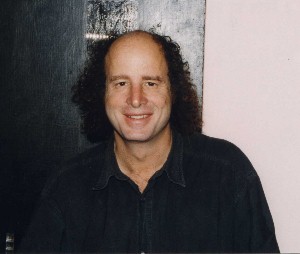

"I think I just got more relaxed and getting older and just more comfortable with talking to strangers. I used to only like to talk to people I already knew." – Steven Wright


GM: Have you opened up more over the years? You told me back in 2002 that talking to people is draining for you.
SW: It’s amazing that you’re pulling this out. I’m going to be telling my friends about this because in the last two or three years I’ve gotten way more interactive and extroverted with people. It just evolved. I know what you’re describing as what I was like then as opposed to today. I just kinda changed. I don’t know.

GM: Did you notice a particular time when it started happening?
SW: I did notice it happening.

GM: But you can’t attribute it to a particular time or event?
SW: No, I think I just got more relaxed and getting older and just more comfortable with talking to strangers. I used to only like to talk to people I already knew!

GM: Obviously you still love performing.
SW: Oh yeah, yeah.

GM: That love must have changed or presented itself differently over the years. Do you appreciate it more now or have you always loved it equally?
SW: I have always loved it. It’s such a dangerous thing. It’s walking a tightrope wire. Did I tell you that before?

GM: No.
SW: It’s like dangerous. Very exciting and dangerous. Now I forgot what I was going to say. Oh, I’ve always appreciated how lucky I am, Peter Lassally seeing me, how lucky my career is. I know that. But I appreciate it even more now. It’s just amazing to make a living from making stuff up. It’s unbelievable.

GM: And I read that you wanted to reintroduce yourself to a new generation. Did that happen?
SW: Yeah, there’s younger people because I did that special in 2007 on Comedy Central. It got some younger people in there. But I don’t want to be rude, but I have to meet a friend of mine in a restaurant.

GM: Okay, that was perfect. And sorry for bothering you again.
SW: Oh, no, no. It’s alright. I loved talking to you this morning. And no problem because I asked if you wanted to talk later anyway, right?

GM: Yeah, and I thought I had it all but I was thinking about it during the day.
SW: Yeah, I just slowly opened up. Okay, thanks a lot.

Tuesday, January 15, 2013

Retro interview: Steven Wright

I interviewed Steven Wright yesterday. He's playing the River Rock Show Theatre on Friday, Jan. 19. I'll get that transcribed and up here in the next week but in the meantime I thought you'd enjoy this trip down memory lane. It's the first time I spoke with him back in 2002. I re-read in preparation for our latest chat. My memory of it was that it was difficult. He was a slow and thoughtful guy and those long silences intimidated me. As you'll read, it starts off awkward but picks up and is actually kind of fun. Fun to read, anyway, but to give you an accurate representation of how it went, whenever you read "(pause)", count off five seconds. You'll see when I post the latest interview with him that he's much more talkative now. In fact, it might be one of my most fun interviews. From most difficult to most fun in 11 short years. (This, along with most of my other interviews, can be found at comedycouch.com)


STEVEN WRIGHT - April 10, 2002
GUY MACPHERSON: I read where you said talking to people drains you. And you're doing interviews all day, right? So how are you hanging in?
STEVEN WRIGHT: (pause) I'm not doing 'em all day.

GM: Oh, aren't you? Well, you're doing a few. Aren't I your third today?
SW: No, you're the first.

GM: Really! Oh, perfect.
SW: I only do four at a time.

GM: Because it drains you?
SW: (pause) Mm-hmm.

GM: And then what do you do? Sleep the rest of the day?
SW: (pause)

GM: To get your energy back?
SW: Hmm, whatever you wanna say.

GM: This is going to be perfect, then! I'll just supply you with the quotes.
SW: Just talking to people... It's just... Oh, man.

GM: Any people, or just people you don't know?
SW: Any people. I can only talk to people for so long. My family, my friends, and it's like, 'Thank you very much.' It just exhausts me.

GM: Mentally exhausts you? Physically exhausts you?
SW: (pause) I don't know. (pause) How's Vancouver?

GM: Ah, it's raining. You've been here, haven't you?
SW: Oh, yeah.

GM: Where have you played?
SW: Ohhh, I can't remember.

GM: But the theatres, though, right?
SW: Oh, yeah.

GM: Never when you were starting out playing clubs?
SW: Uh, no. (pause)

GM: Because you hit it too big too soon to play the small clubs here, I guess.
SW: (pause) I guess.

GM: It was, like, two years after you started that you were on Carson, right?
SW: Uh, three.

GM: Oh, three. Okay. So you felt you were ready? You didn't think, 'Oh my God, I can't do this yet.'
SW: I didn't think whether I was ready. I took it. They asked me to go, so I went. I didn't even think about whether I was ready. It was a great break.

GM: I can imagine. And then you were invited back within a week.
SW: Yeah.

GM: Don't guys usually work on their five minutes or whatever they get, and just work on it, perfect it? How did you get ready a week later for more?
SW: Uh, I didn't really have time, which kinda worked out because I couldn't even worry about it. I just kind of went over it with the talent coordinator what would be about five minutes of another piece of material. And then I just did it.

GM: And then did you go to panel?
SW: No. On the first time I did. The second time I didn't. And then all the other times I did.

GM: That was just a completely different show then. Because when you were on, people recognized you the next day, right?
SW: Yeah. There wasn't as much media then, so that show, your life could change in one appearance. It happened to a lot of people, and it happened to me. There's so much more TV now. You saw TheTonight Show with Johnny? 
GM: I used to watch it all the time.
SW: Yeah, it was great. I miss him.

GM: So do I. Especially when you see Leno. (pause) But you don't have to offer an opinion on that.
SW: Thank you. (pause) But you know what? You grew up with Johnny. I mean, I grew up with Johnny. He's like a hero of mine. I didn't grow up with Letterman. I didn't grow up with Conan. You know, they're almost around my age, so the whole thing has a different... Conan or Letterman, I
think they're all funny but they don't have that legend thing because you weren't a kid when you watched them.

GM: Right. Except for the younger people who are growing up with them now. But when you see the comics on the Tonight Show now, it's 'Who are these people?' You never see them again. It's completely different, isn't it?
SW: (pause) I don't even... I don't really watch. I don't know.

GM: Do you watch TV?
SW: Yeah. But not that.

GM: I'm interested in your persona. I hear it's not a persona with you, like a lot of comedians have a stage persona. This is you, right?
SW: Well, it's how I speak. It's my demeanor. That's real. It's always fascinated me. I know people have fake versions of... you know, they go on stage and they're just a whole other person. When people say to me, 'Oh, you really talk like that!' I always get a kick out of that. I think to myself, 'Wow, you mean they thought that not only do I make up the jokes, I actually made up a whole other way of speaking.'

GM: I presume you've always talked like this. So when you started out, and you didn't see other comedians like yourself, were you tempted to go, 'I gotta speak faster.'
SW: No. I was focussed on the material. I never even thought about how I talked. It was the material. It wasn't till a year later that someone wrote something about me in the Boston paper that I even knew that I talked like that. I mean, no one's doing reviews of you when you're in eighth grade or when you're in college. No one is describing you. It never even entered my mind. I never
even associated 'deadpan' until this guy wrote this article. 'Oh, yeah, I guess I do talk like that.' Even the jokes, he said they were abstract. 'Oh, I guess they are abstract.'

GM: Do you have siblings?
SW: Yeah, I have two brothers and one sister.

GM: And are they quiet and reserved or deadpan?
SW: I don't know, man. You know...

GM: No one's done a review on them.
SW: No. (laughs)

GM: When you started out, there weren't a lot of other comics other than, I can think of, Henny Youngman and Rodney Dangerfield, doing non-narrative material. Not that their jokes were anywhere near yours. But that style where it's thought after thought.
SW: I guess, yeah.

GM: Now there are tons. So obviously you've influenced a lot of young comics. What do you think of these guys?
SW: I don't know. I don't see them much. I don't really watch... I mean, I'm happy I had an influence. I'm flattered. See, when I grew up, when I was a teenager watching the Tonight Show, and then I watched it into my twenties, and I changed as a person. I don't really watch comedy that much.

GM: Because you've seen enough in the clubs? Why is that?
SW: (pause)

GM: One comedian told me it's like being a magician. If you know how to pull a rabbit out of the hat...
SW: No, it's not that I know how. It's just that my interests... I love to perform and I love to write.
I'm not... People change. People just change. I'm not into watching... I don't watch sitcoms, I
don't watch talk shows barely at all. It has nothing to do with that I'm a comedian. I think if I was a carpenter, I would have changed. Everyone changes. I mean, I don't watch Hogan's Heroes, either.

GM: We don't get that anymore. I tell you, I would watch it if it were still on.
SW: (laughs)

GM: So did you like Henny Youngman and Rodney Dangerfield? Were they influences? Or who was?
SW: I liked them, but I didn't think, 'Oh, I want to be like that.' My main influences were Woody Allen and George Carlin. Woody Allen had some comedy albums and I loved how he structured material. I loved his writing. And that influenced me. And I loved how George Carlin observed the little tiny things in life that you don't really notice. And those two comedians influenced me more than the other ones. Carlin, I was amazed by his breaking down little things and the structure of how Woody Allen wrote jokes. He told stories and he told jokes within the story. And that's how I learned how to write jokes.

GM: Do you ever feel like telling stories on stage? Yours are mostly one-offs, right?
SW: Some of them are connected into stories. (pause)

GM: Are you neurotic?
SW: (pause)

GM: Like a lot of comedians. Like Woody Allen?
SW: I would say no more or less than everyone else.

GM: I don't know if this constitutes as neuroses, but I was reading about your phobias: Planes, cars, motorbikes, elevators, bridges. Was that true?
SW: (pause) Some of it.

GM: Which part?
SW: Oh, transportation. I don't know. Some transportation bothers me. But what kind? Now you're going to ask me what kind. I don't know. I don't like elevators. No big deal.

GM: Planes, though. You gotta fly a lot.
SW: I fly a good amount, but I don't fly as much as you would think I do. I go on tour with a tour bus, so I drive.

GM: And it's because of your fear of flying?
SW: I don't like to fly and I don't like the commotion of the airport, even before September 11th.

GM: I'm with you, brother. I took a course on fear of flying. That's how afraid of flying I am.
SW: Did it help you?

GM: It did, at the time. And this was in the summer last year. Then September 11th happened, and it shot me right back to where I was before.
SW: How did it help you?

GM: Well, they attacked it by knowledge, through the pilot giving the course, as well as a psychologist who taught you certain breathing techniques, relaxation techniques while you're on
there. I was more interested in the knowledge, because I just go, 'How can these things stay up?'
SW: Mm, right, right. And knowing how it worked helped you?

GM: Yeah, and knowing all the safety precautions they have, like if all the engines conk out it can glide a hundred miles and things like that.
SW: Wow.

GM: All the backups that they have. So I'd recommend it.
SW: Yeah, maybe I should take that.

GM: Could you imagine going on Fear Factor? Have you seen that show?
SW: Uh, I just saw it the other day for about ten minutes. Going on there for what?

GM: Just going on there. Someone like you or me with these fears. There was one on last week where they had to jump out of this moving helicopter. Just going in the helicopter is the fear factor for me.
SW: (snickers) That's funny.

GM: This surprised me, but you're an Oscar winner.
SW: Yes, for my short film in 1988.

GM: Was that for writing or for acting?
SW: I wrote it with a friend of mine and I was the main character in it.

GM: What was the Oscar for?
SW: It was for the short film category. It wasn't that I specifically wrote it or acted in it.

GM: I didn't know they gave Oscars to short films.
SW: Yeah, every year.

GM: And I certainly didn't think they gave Oscars to comedies. They always get the short shrift.
SW: Well, Woody Allen's won a lot of Oscars.

GM: That's true. But I was thinking of the Best Picture. And he did win for Annie Hall, but that was about the last comedy to win, I think.
SW: (pause) Didn't Robin Williams win an Oscar?

GM: He's not funny, though. (pause) Now, are you going to do a full length? Have you done one, have you written one?
SW: No, I've done two short films.

GM: Where can we see these? I'd love to see them.
SW: (pause, sigh) No, they can't be seen.

GM: (laughs) They can't be seen!
SW: (laughs) They can't be seen! They're not on video, they're not on DVD, you can't rent them in the store. One was on HBO a long time ago. We made it for HBO and it won an Academy Award by accident. And the other one went on the Independent Films channel, that I wrote, directed and was in. That was playing last year all throughout the year.

GM: Well, make another, so you have three, then put them on video.
SW: Yeah, that's a good idea.

GM: But are there any plans to... Are you writing a new movie?
SW: Yeah. I'm working on something else. I don't know what it is, but I'm working on it.

GM: Full length? Or you just don't know what it is?
SW: No, probably another half hour one. But mainly I do live shows. I do the film on the side.

GM: Do you still have so few possessions that you can move in a cab? Or have you accumulated more over the years?
SW: I would probably need two cabs now.

GM: Two cabs! So you're really living the high life.
SW: Yeah.

GM: And where are you living?
SW: New Hampshire. I live on the ocean in New Hampshire.

GM: Away from the scene.
SW: (pause) Yeah. (pause)

GM: Now, you finally got a website, right?
SW: Yes. My dog has a website.

GM: Who doesn't? When did it start, the stevenwright.com?
SW: About, uh, last, uh, November.

GM: Do you have a computer now?
SW: Yeah.

GM: Aw, you're selling out, man!
SW: (laughs) I have floors now. It was wild going across the 2-by-tens and trying not to fall in the basement. Now I'm like everyone else.

GM: Did the website come about as a reaction to all the others that are out there with your jokes on them?
SW: No, what happened was I heard that you could do editing film or tape on a computer, so I wanted to learn how to shoot stuff and edit myself. So I got that computer for that reason. And then of course the computer just doesn't do that. Of course, it does all 8 million other things. So now I'm on the e-mail, now I have a website. But it was all because of the editing thing.

GM: You're in the 21st century now.
SW: Thank you. It's crowded.

GM: So you still enjoy doing the stand-up. You say that's your thing.
SW: I love it.

GM: You love it.
SW: I love it. I love writing and I love seeing what works and I love being in front of the audience. I
love making a living from my imagination. I feel very lucky.

GM: How often are you writing? It comes in waves, you say, right?
SW: Yeah. I'm really a receptionist for my mind. I just think of something then I write it down. I don't try to think of things. They just float into my head and I'm a secretary. With a little grey skirt on and a little wig. Whenever I write a joke, I dress like that -- like a secretary in 1958.

GM: What was the last joke you wrote? Or idea?
SW: Uh, it was three days ago and I can't remember what it was. Something to do with, uh, geese.

GM: Well, you're coming to Canada. That'll be a good one. (pause) Just don't make fun of our geese, man.
SW: I don't make fun of anything.

GM: That's true, you don't. So, is it easier, you think, to come up with these now with practice, or is it more difficult?
SW: Mm, it's the same. (pause)

GM: Will your act always be changing? Will you always be incorporating--?
SW: Yeah, I'm always moving things around, dropping things out, adding new stuff. Like a painting that will never be finished.

GM: That's beautiful, man.
SW: (laughs)

GM: What about playing the huge theatres, like you're playing in Vancouver and I assume you play all over? Do you like that?
SW: (pause) Yeah, I like it.

GM: (laughs) Of course you do. Okay, let's take the money equation out. If you could make the same money, would you rather be playing Ding Ho's?
SW: No, I like... I don't like playing in a club. I like being in a theatre.

GM: Why is that?
SW: It's just more comfortable. It's more relaxing. The stage is bigger. I don't know. The clubs were fine when I was in the clubs, but when I went into the theatres, I went, 'Oh, this is even better.' It's more relaxing because of the size -- or I don't know what it is.

GM: The lighting.
SW: (laughs) Maybe it's the curtains.

GM: (laughs) The velvet curtains. They're soothing. And people are there to see you, right?
SW: Yeah, that's true. But they would come to clubs to see me, too.

GM: I guess. But are they more civil in a theatre? Or are people yelling out stuff like, 'Hey, do this'?
SW: Well, the audience is better because there's not waitresses going around. There's less commotion. The whole thing is just better.

GM: And you do a pretty substantial show, don't you? You're giving people their money's worth.
SW: I do about 85 minutes.

GM: Is it completely structured? I mean, obviously you have to memorize your material, but you have so much from over the years.
SW: I know about 90 percent of the exact thing that's going to happen and then there's little pieces where I just see what happens. I see which material I'll do while I'm standing there. But I don't have time to make it a memory test. I know what I'm gonna do.

GM: And then if something hits you, you'll just go with it.
SW: Right.

GM: You don't ever just come up with a new joke right there, do you?
SW: No.

GM: I read where you said that you might think something's funny, but if the audience doesn't laugh, you just take it out.
SW: Right.

GM: How many shows will you give it?
SW: Three. If it doesn't work three times, it'll never work. And if it works three times, it'll always work. And they decide, you know? They're in charge at that stage. And if they don't laugh, I don't think that it wasn't funny, I just think they didn't agree with me.

GM: Could it it be a regional thing? Or is your humour universal?
SW: It's not regional because I talk about such common denominator things of life. That's the stuff that interests me. It's never regional.

GM: What else interests you besides writing and performing?
SW: I love to read. I love to play the guitar. I love baseball. I love going to Fenway Park. I'm glad the season's started again.

GM: Another losing year.
SW: Yeah, another hard year. You're such a positive guy.

Friday, April 17, 2009

Paula Poundstone at the River Rock

I've been doing this blog for a few months, I think (my memory sucks), but I'm still not in a full-time blogging mindset. So when I didn't have to review the Paula Poundstone show for the Straight, I went just as a fan and sat and enjoyed it. I didn't have to sit scribbling notes so I didn't, forgetting about you, the faithful blog reader. Unfortunately that means I can't report to you here in the blog about why she was so great because my memory sucks – oh, I see I already said that. I mean, I'll do my best but it's sketchy at best.

The first impression was the crowd, or lack of one. Poundstone is one of the best comics there is and consistently sells out theatres in the States. Why should the River Rock, which seats about a thousand, be only half full? Her manager said people don't know her up here, but I don't buy it. I know that her show wasn't a River Rock event, per se. An outside party rented the room and brought her in. Lesson to fledgling promoters: You can't just announce a big name and hope the rest just falls into place. You have to actually, you know, promote the show. I'm convinced that with the proper promotion, Paula Poundstone would have sold the joint out.

But being the pro she is, not a single mention was made of the empty seats. Nor of the fact there seemed to be nobody working the place. There was no introduction, no opening act. Rather she just strode onto the stage shortly after 8 p.m. sans fanfare and proceeded to entertain us for almost two hours.

Poundstone has what seems like very little prepared material. But maybe that's just her solid crafstmanship that makes us think she's flying by the seat of her man-pants. Certainly most of the show is crowd work. And that's as it should be because she's an absolute mistress at it. (That's the feminine form of master, isn't it?)

Like a lot of great comics, she uses her inner child to perfect effect. A lot of Steven Wright's jokes rely on this. He'll take a phrase and by taking it literally, as a child would, comes up with a(n) hilarious slant on it. As adults, we know so much we automatically jump to the correct meaning. But kids don't have the experience to fall back on. Here's an example of a Wright joke:
I saw a bank that said "24 Hour Banking", but I don't have that much time.
When we were in Edmonton last summer, my wife came home from a run and said, "It's stinking hot out there." At which point our 3.5-year-old ran to the door. "Where are you going?" she asked. "I want to smell outside!" That's not a joke, but there's perhaps one in there somewhere. It's just an example of the child's literal mind at work.

Similarly we all know what it's like to be peppered with a hundred questions by a 4-year-old. They ask some really great, really tough, questions. And they don't stop. That's exactly what Paula Poundstone does. She turns her kid-brain on as she asks question after question to the unsuspecting saps in the audience. She'll want to know someone's job, and their job before that, and right back to the beginning, trying to get at how they arrived at their current position. It's the equivalent of the "why? why? why?" of a preschooler. Sometimes the interview seems to be going nowhere, but Poundstone is no quitter. She knows she's good enough to spin even the dullest of subjects into comedy gold. She's in no hurry. She takes us to the brink of losing us – she's not afraid of the quiet (except in her hotel room at night when she needs the drone of CNN for company) – and then ever-so-skillfully brings us all back into the fold.

When talking with a spotlight operator, she found out that the woman started as a teenager carrying Jane Siberry's guitar for her. Poundstone, a fan of the singer, says she never knew how to pronounce her name before. Well, the Jane part she knew, she said to big laughs. "Fuck of a lot of good that did," she said after learning that Siberry has now changed her name to Issa (pronounced eeee-sah). The one thing she knows gets changed. Story of her life.

Okay, so most preschoolers don't say "fuck", but you get the idea. She doesn't much, either. That was the only one. And one "shit". And then each repeated when she was horrified to find a couple of 13-year-olds in the front row. She generally works clean.

One prepared bit I recall was on modern medication. A lot of comics do jokes on anal leakage, but she had a great take on it. If she had a brain tumour and they offered her pills to cure it, but they had a chance of giving her anal leakage, she'd gather her kids around and tell them she loved them and she'd miss them. And then she turned the premise on its head. If, on the other hand, she had anal leakage and were offered a pill to cure it, with the possible side effect of a brain tumour, she'd ask for a glass of water. (I'm paraphrasing, of course, but it's still really funny, I think you'll agree.)

After almost two hours, Poundstone left the stage to a standing ovation. I heard nothing but good things from the people filing out of the place. It's just a shame there weren't more of them.

That's about as far as my memory will take me. If any readers here were at the show, feel free to offer your comments below. It'll spur my memory, too.

On a side note, there was one woman in the audience who almost ruined it for everyone. She had the remnants of a laugh that was a high-pitched, inhaled squeal. Poundstone addressed it a few times, but showed remarkable restraint because this woman did it throughout the show. It seemed to me, and many others in attendance, that she was just doing it for attention. There's no way you can be so aware of that noise coming out of your face and not do your best to muzzle it. She should either try harder to overcome her handicap or never, ever go to another live comedy show again. Ever. She was with two other people. I'm guessing they were new friends who had never been out with her before. She must go through thousands because there's no way I'd ever go out with her a second time.

But all in all, it was a really enjoyable experience. I'd love to see her back here again soon. Whether that happens or not remains to be seen. All it would take is a local promoter with some gumption and a work ethic and a venue that would give her the same respect they give their own acts.

Wednesday, February 18, 2009

Misadventures in interviewing

I love interviewing celebrity comedians. They're mostly all really great and engaging. Don't get me wrong. I also have a blast interviewing non-celebrity comics, too, on my show. The ones I'm talking about here are conducted over the phone for print stories. But you can't beat lounging around your pad talking on the phone. Off the top of my head, only two have been less than engaging.

One was Patton Oswalt, who was pleasant enough, but it was a forced pleasantness and he offered absolutely nothing more than he had to. Most comics will treat an interview as it should be treated – as a conversation. But Oswalt took it literally. If there was no direct question, there'd be next to no answer. If there was a yes/no question, you can bet he'd answer with either a yes or a no with zero explanation. I guess he does a lot of interviews with idiots and went into it figuring I was an idiot, too. And maybe I was. But I was also no different than I am with anyone else. Here's the thing: over the years, I've found no correlation between great answer and great question. Sometimes a really original, well-researched question gets a fantastic answer and sometimes it gets nothing. Sometimes a really banal and boring question gets a fantastic answer and sometimes it gets nothing. It all depends on 1) what the interview subject wants to give, and 2) the connection between the subject and me.

I hung up from my interview with Oswalt thinking we didn't really connect and he wasn't all that giving, but I put most of the blame on myself. I always think I should be able to reach whoever I'm talking to – and I usually do. Oswalt certainly was polite enough, so it must have been me. Then, out of the blue, I got an e-mail from a colleague who I rarely see. He didn't know I had spoken to Oswalt. He just wrote me to tell me that he just had the worst interview of his life... and it was with Patton Oswalt. It was enough to turn him off interviewing comedians altogether. What I can't figure out is why someone who wants to promote a show would piss off the very person who can help promote the show. If you don't want to speak to the press, don't. Simple enough. But if you're going to talk, be a professional.

The only other comic I've interviewed who I couldn't reach was Steven Wright. I wrote about that in an earlier post. But with Wright, I figure, that's just the way he is. I can't blame him for that. He eventually warmed up in his own peculiar way but was incapable of really communicating with someone he doesn't know.

Jimmie Walker
was a tough nut to crack. He hates doing interviews and didn't want to do one. He's been screwed over by reporters in the past, who sweet-talk him to his face then turn around and bash him in print. That's not my style, but he had no way of knowing that. But I explained to his publicist that I respect him and I only write about comedy and was finally able to finagle one. I call him at the appointed time and he answers the phone quite strangely, I thought. It was like a sexy voice or something. I can't explain it. He was probably just being funny. But I tell him who I am and he immediately shuts down. The first few questions were like pulling teeth. But I persisted and as soon as I showed I knew something about his history outside of Good Times, he started to warm up and it turned out to be one of my favourite interviews.

Beyond that, I've had a couple of funny experiences while conducting phone interviews, both involving my son. These days, I can tell him I've got a phone interview to do and he'll leave me be. But back when he was two or three, it was more challenging.

One morning we got up around 9 and I checked my e-mail at 9:23. I remember the time because the message said Roseanne Barr was available for an interview at 9:25. So I quickly put on a video, explained to my not-quite-two-year-old that I needed to talk on the phone and he couldn't disturb me, then went in the other room to call Roseanne. Because of the situation, I wasn't as comfortable as I usually am. I was walking around talking to her when my son walks in carrying a big race track. I silently motioned "shhh" with my index finger to my lips while Barr was talking. I had forgotten that we hadn't eaten breakfast, which is no problem for me, but when a toddler is hungry, forget about it. That one little motion turned him from happily playing with his toys to bawling his eyes out. I was quietly trying to console him when Roseanne whined in her distinctive nasally voice, "What's wrong with that kid?"

I brushed it off, and got right back to the interview. We talked a bit more and my son started crying again. Roseanne, quite accusingly, I felt at the time, said, "Who's looking after that kid?" I told her I was and she said, "No, you're not. You're talking to some old broad." Then she told me to give him a cookie. It wasn't the smoothest interview I had done and I thought she was being harsh, but when I went back to listen to the tape, I realized she was actually being nice, in her own sweet way.

Fast forward a year and a bit and my son has just learned to poo on the toilet. So he's out of diapers but still needs help. I think you can see where this is leading. I'm expecting a call from Jay Leno's assistant one morning to arrange a time for later that day when I can interview Leno. I had set up a playdate for my kid so I could do the interview in peace. Everything would be fine.

So the boy is in the back yard playing in the dirt and the phone rings, as expected. Leno's assistant is on the line. She says, "I have Jay Leno on the line, can you take it?" Uh... My mind races. I can't say no. He's a busy guy. But I had no time to warn my son. So I stammered, "Sure," and headed to the office to record the call. On the way there, my cordless phone started beeping. It was running out of juice. So I had to pick up the corded phone, meaning I couldn't even walk around or see out to the back yard to check on my son.

So I'm talking to Leno and he's going on like a pro when my son walks in. He starts to talk and I gave him the shush sign again. Being just over three now, he wasn't reduced to tears. In fact, he stopped talking. And then he whispered those five little words I didn't want to hear: "I have to go poo."

Shit.

Leno is still talking and I'm trying to figure out my options. I finally pulled my son's pants down around his ankles and pointed him in the direction of the toilet. It seemed to work. He waddled off towards the bathroom and I was home free, I thought, not realizing he had never once gone on his own before. So a minute passes and he waddles back to the office and whispers, "I don't have to go now." Fine with me. So I put the phone between my ear and shoulder and bend down to pull up my son's pants. Leno is still talking, oblivious, and I'm attempting to offer the appropriate responses. While I'm bending over, the phone squirts out and lands on the floor. I quickly finish the job, send my kid out of the room and pick up the phone. Leno's still talking. I figure I can pick it up on the recording, which I did. It didn't make for the smoothest interview, but he didn't seem to notice.